
Building Quality Factors: What Makes a Building Truly Strong?
Introduction
Building quality factors determine the strength, safety, and long-term durability of any structure. When it comes to construction, a building is more than just bricks and cement. Its quality defines how well it performs over time.
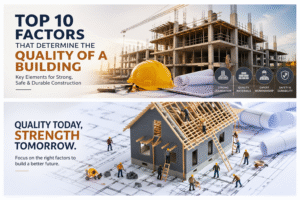
Many people focus only on design and cost, but the real strength of a building lies in the technical details behind its construction. Understanding these building quality factors helps you make better decisions when building or buying a property.
1. Strong Foundation in Building Quality Factors
The foundation is the backbone of any building. A properly designed and executed foundation ensures stability and prevents structural issues like cracks or uneven settlement. Soil testing is essential to determine the right type of foundation.
2. Quality of Construction Materials for Better Building Quality
Using high-grade materials such as cement, steel, and bricks directly impacts the lifespan of a building. While cheaper materials may reduce initial costs, they often result in higher maintenance expenses in the long run.
3. Structural Design
A well-planned structural design ensures that the building can withstand loads, weather conditions, and environmental stress. Proper design of beams, columns, and slabs is crucial for long-term safety.
4. Waterproofing System
Uncontrolled moisture can gradually damage structural elements and interior finishes. A reliable waterproofing system protects roofs, walls, and basements, helping maintain the building’s strength over time.
5. Ventilation and Natural Light
Proper airflow and natural lighting improve indoor comfort and reduce energy usage. Poor ventilation can create damp conditions and negatively affect living environments.
6. Electrical and Plumbing Quality
Electrical wiring and plumbing systems are critical yet often overlooked. High-quality installation ensures safety, efficiency, and avoids costly repairs in the future.
7. Sustainability Features
Modern construction increasingly focuses on eco-friendly solutions. Features like solar panels, rainwater harvesting, and energy-efficient systems not only reduce environmental impact but also lower long-term costs.
8. Location and Environment
The surrounding environment plays a major role in a building’s value. Accessibility, infrastructure, and neighborhood development directly influence both usability and resale potential.
9. Skilled Workforce and Supervision
Experienced professionals ensure that construction is carried out according to standards. Proper supervision helps avoid common construction defects and ensures quality workmanship.
10. Legal Compliance and Approvals
Following legal regulations and obtaining necessary approvals is essential. Non-compliance can lead to legal complications and affect property value.
Bonus Tip: Focus on Long-Term Value
Cutting costs during construction often leads to compromises in quality. Investing in the right building quality factors from the beginning helps avoid future expenses and ensures durability.
Conclusion
A well-constructed building is a long-term asset that provides safety, comfort, and value. Paying attention to essential building quality factors ensures that your investment remains secure for years to come.
For expert guidance on construction and property decisions, explore the services offered by BuildTech Realty, where you can find reliable support for building, buying, and investing in quality properties.
You can also refer to global construction standards from organizations like ASTM International to understand quality benchmarks.